Professional Identity
As a designer, I like making my ideas tangible. I express my thoughts and ideas through sketching and physical prototyping. I strive to find new solutions to existing problems. These are the tasks where I usually take the leadership role, as it fuels my motivation and serves as an outlet for my creativity.
I usually work following a very linear process, inspired by the Double Diamond by the British Council (Design Council, 2019), starting with the discovery stage, understanding the problem description or the design requirements. From here, I do initial scoping and research, then shift to sketching and ideating the initial concept. After developing a tangible solution, I evaluate it with user input and expert advice, which serves as an exploratory input for the design process. This stage helps uncover new insights into the topic and can highlight potential challenges of the current solution.
I then develop this solution further and try to incorporate the input into the design. Then I proceed to user testing, where I let users experience the design solution, and I can observe how they interact with the design and if everything makes sense. Afterwards, I polish the prototype and deliver the final iteration of the design, which is then either presented to peers and stakeholders.

Weaknesses
Perfectionism
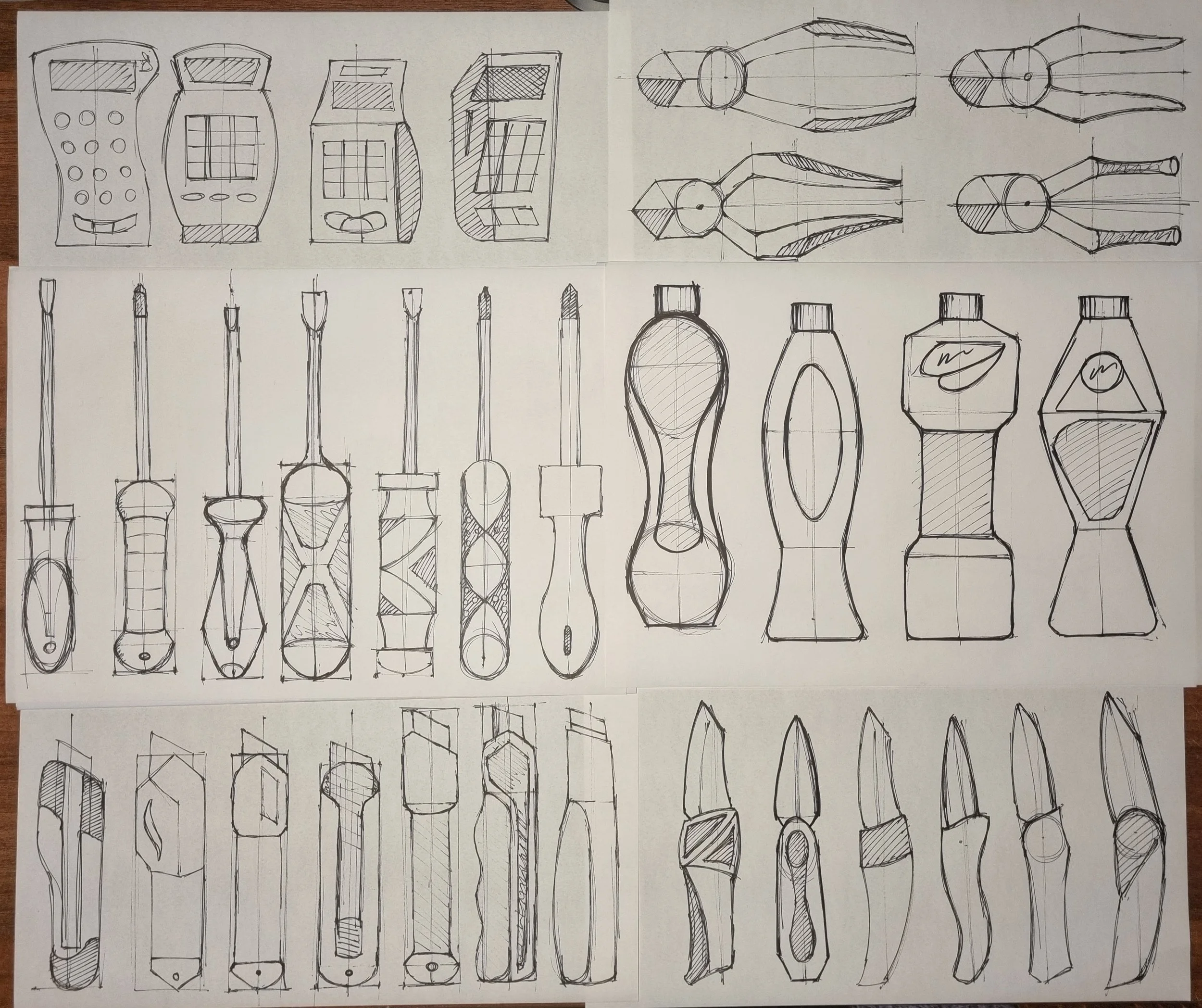
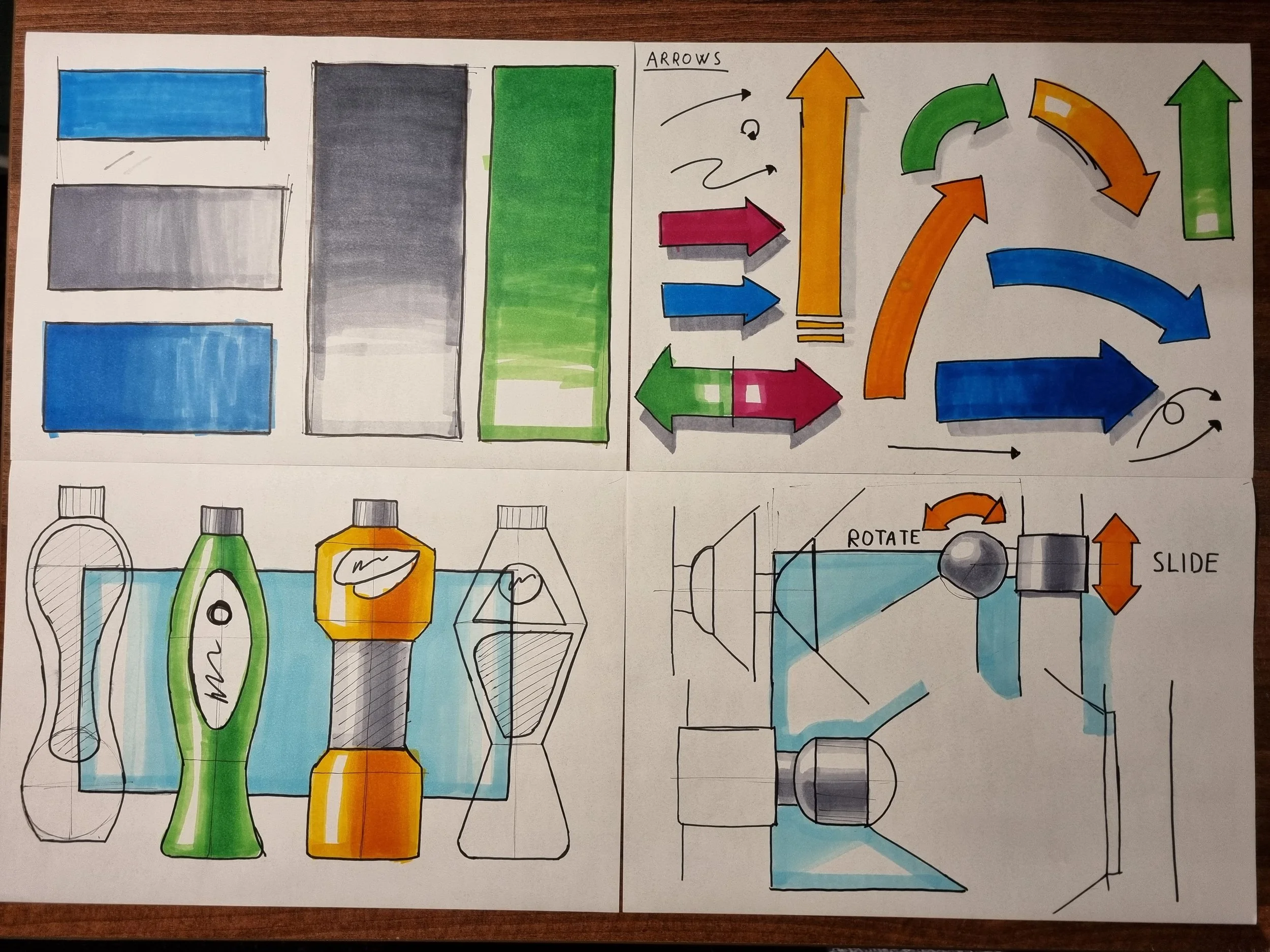
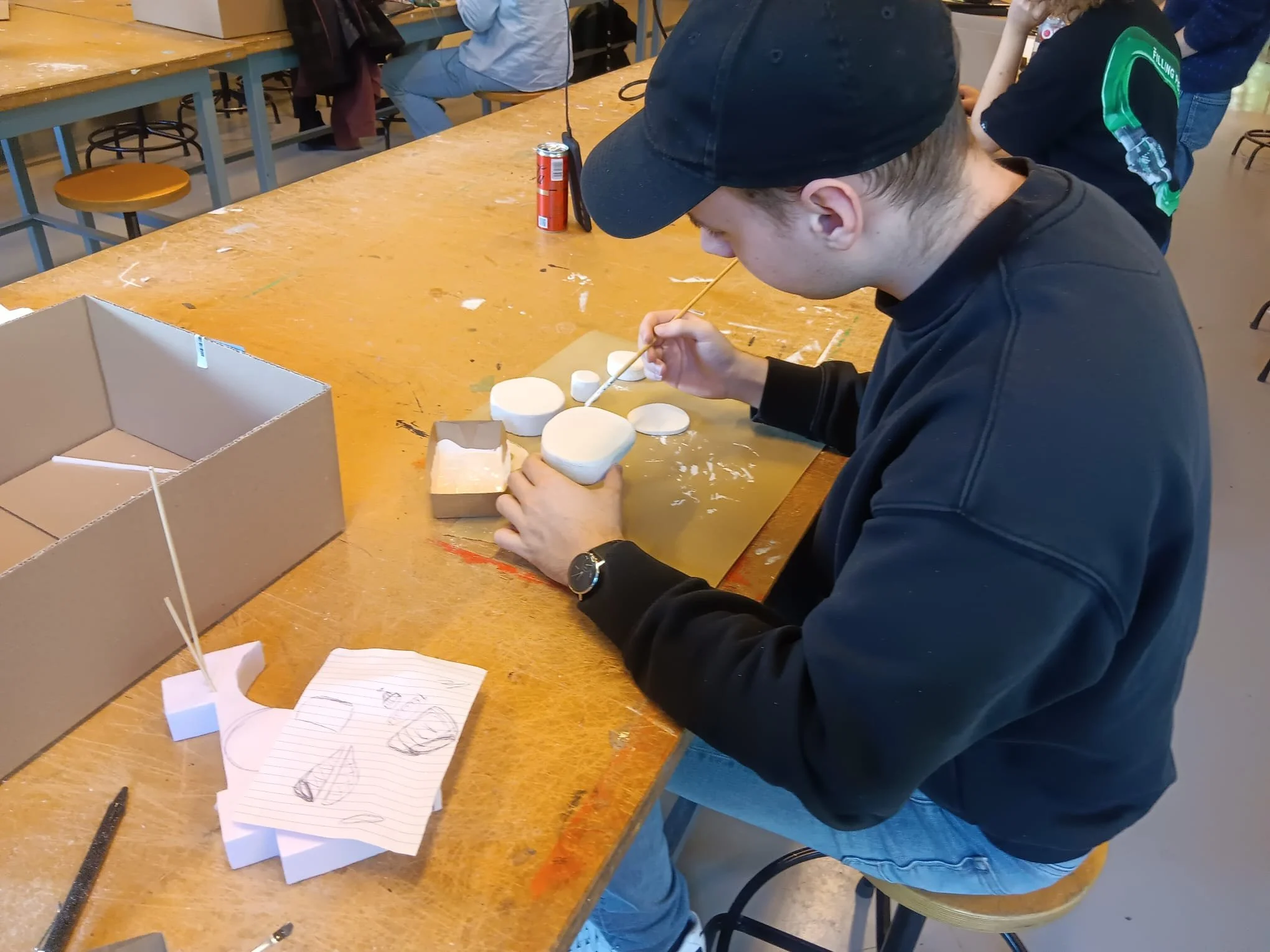
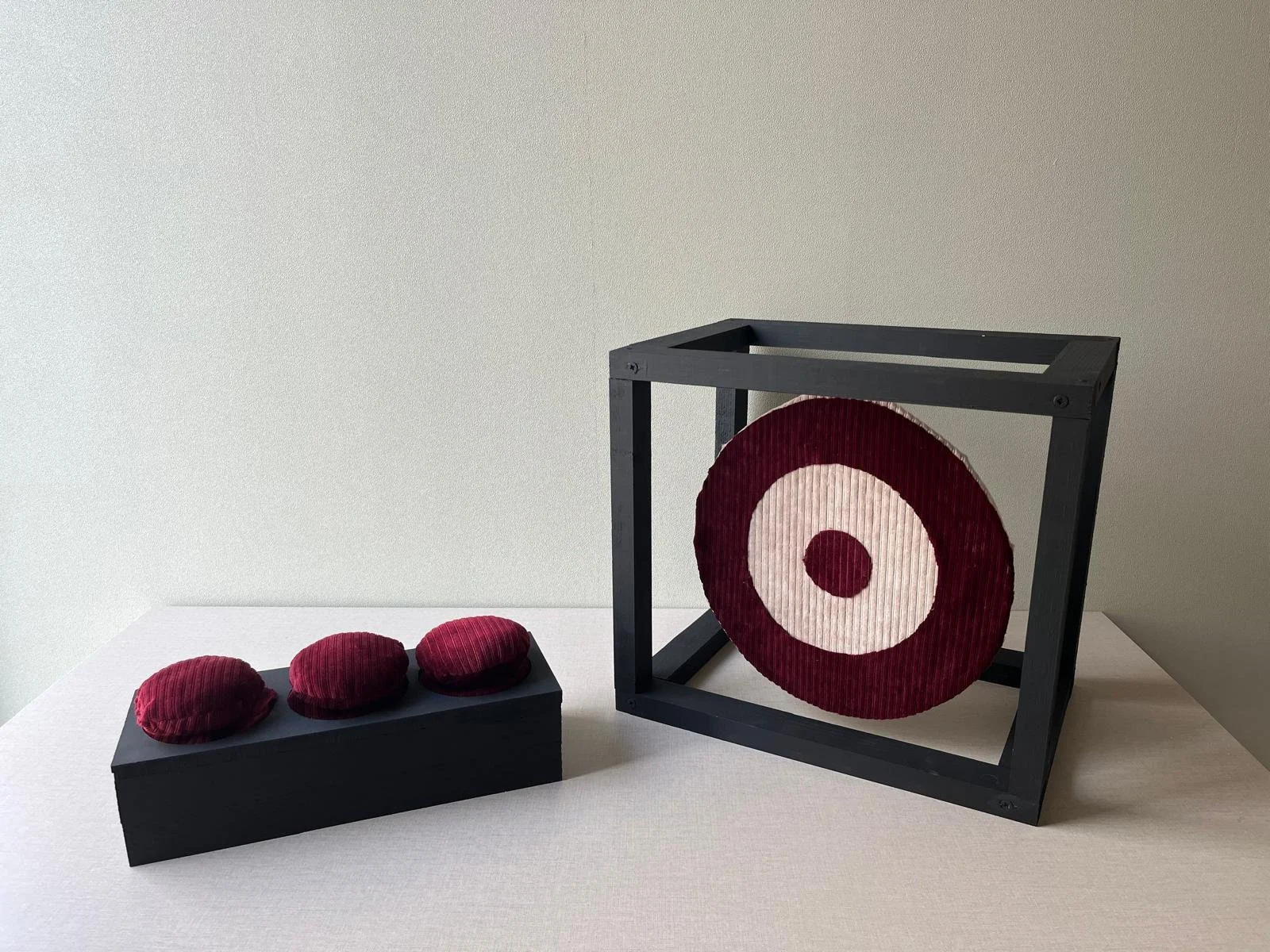
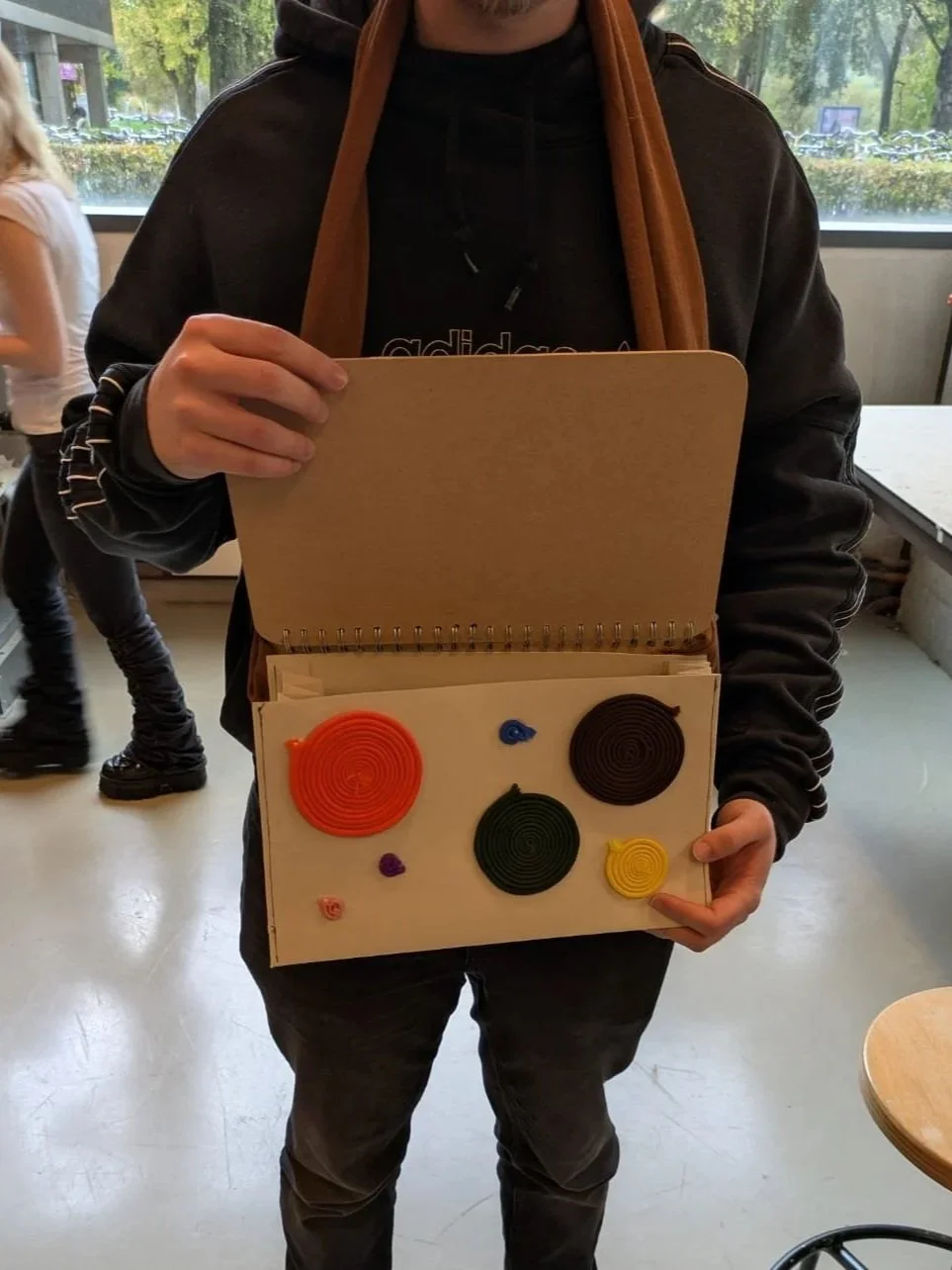
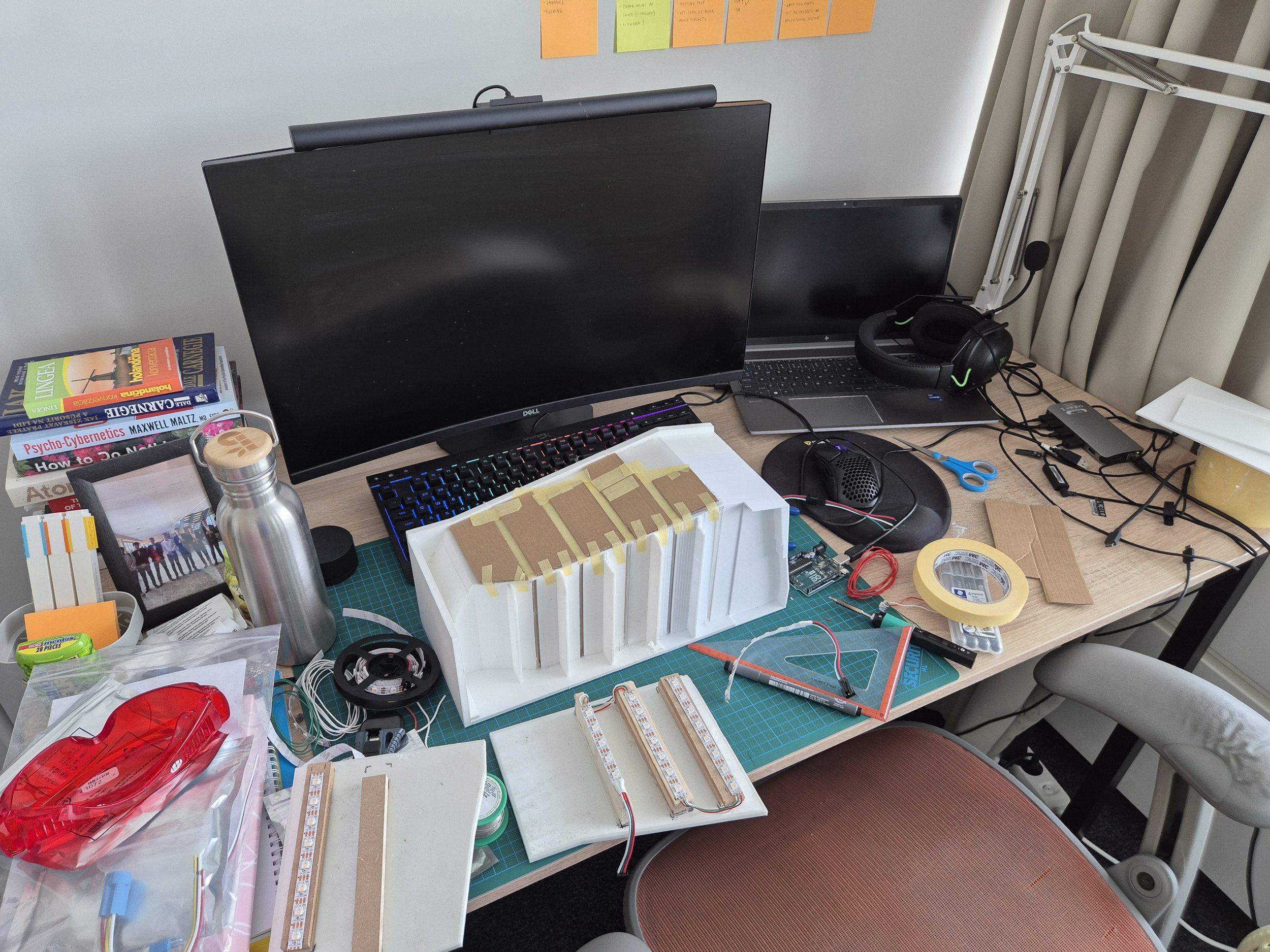
Another prominent weakness I started with was the obsession with perfectionism. I always strive to reach the highest quality and the most polished result, making very precise prototypes and museum-quality products. This was most noticeable in my sketching; given my background in arts, I spent a lot of time drawing for precision, rather than speed. I have been gradually improving this, whether it would be making rapid sketches and lo-fi prototypes to communicate ideas to peers and assessors. I have been applying the design-through-making method, which encourages making more iterations of physical prototypes to test feasibility and assess whether the concept would work.
Deciding on little context
Most of the design projects rely on making decisions based on too little evidence and context. This can be quite freeing and open doors for creativity to allow for unexpected and creative solutions to emerge. I still find myself struggling to get past this stage at times, where I am unsure where to start with a project. This often causes me to end up in analysis paralysis, where I am unable to decide on a direction. In some cases, I miss the collaboration and creative atmosphere of a group project. To overcome this, I have been communicating with peers about the individual assignments and projects to get a fresh perspective and inspiration, as sometimes the best solutions don’t have to be the fanciest or the most complicated.
Strengths
Design through making
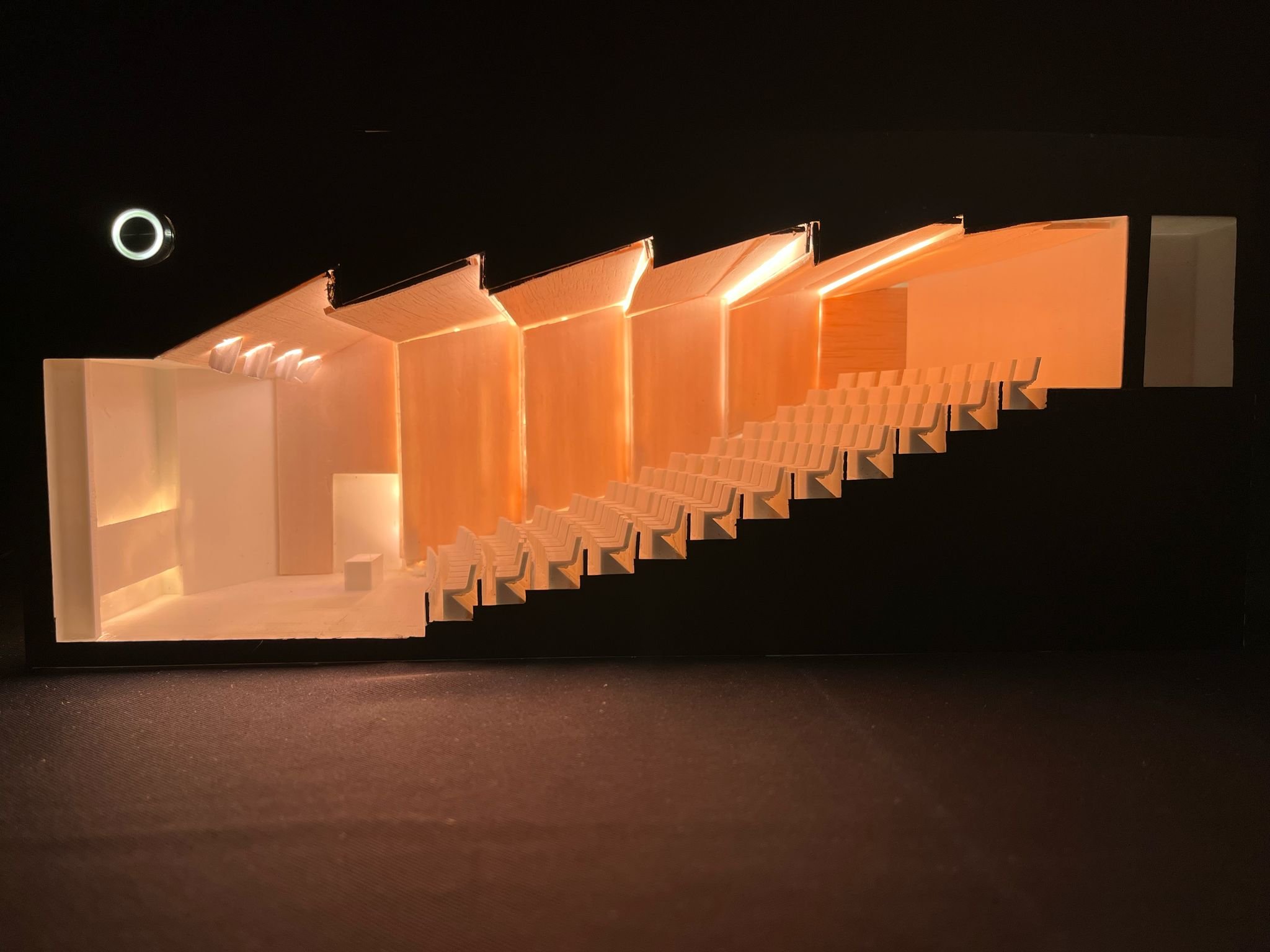
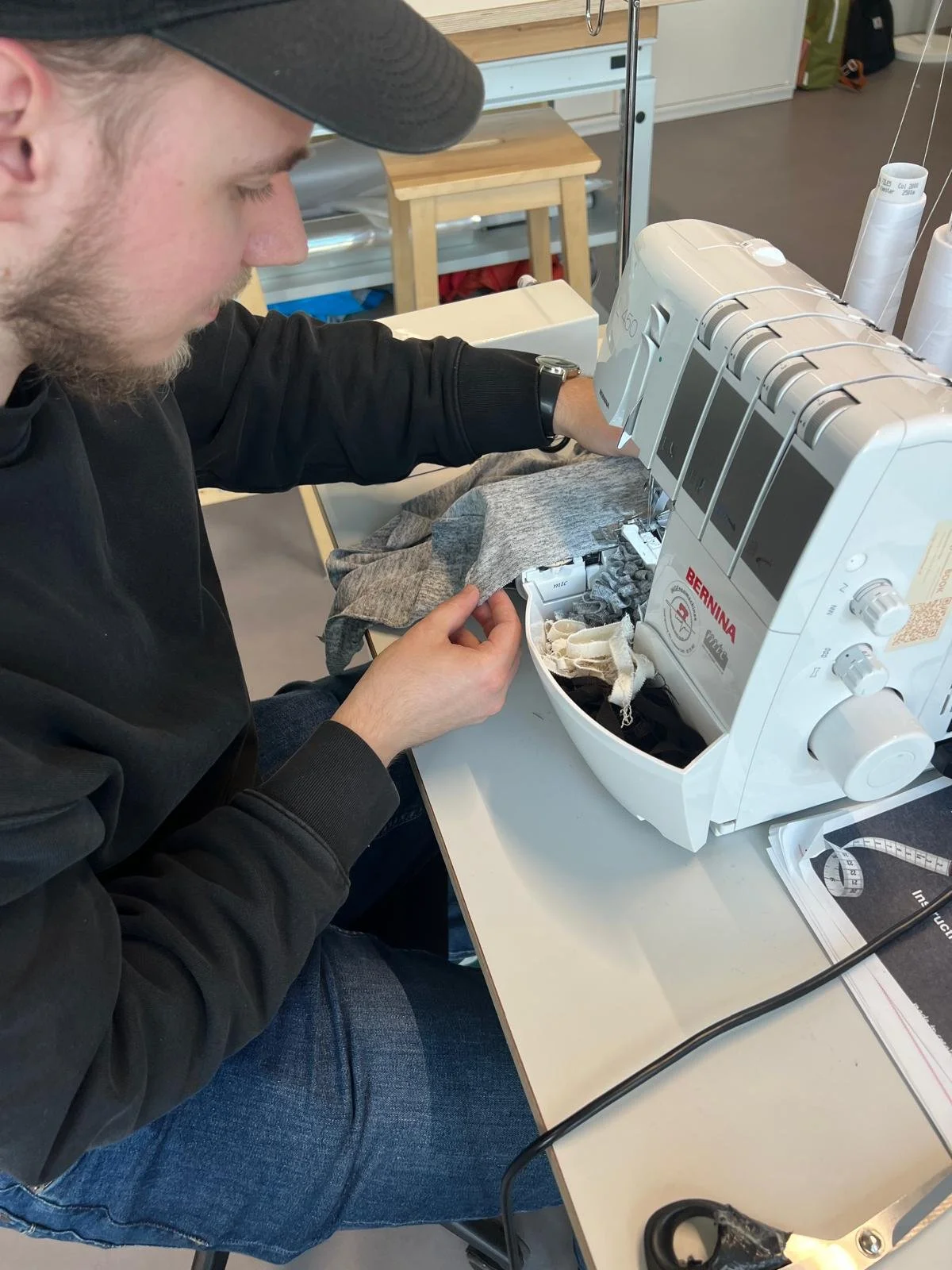
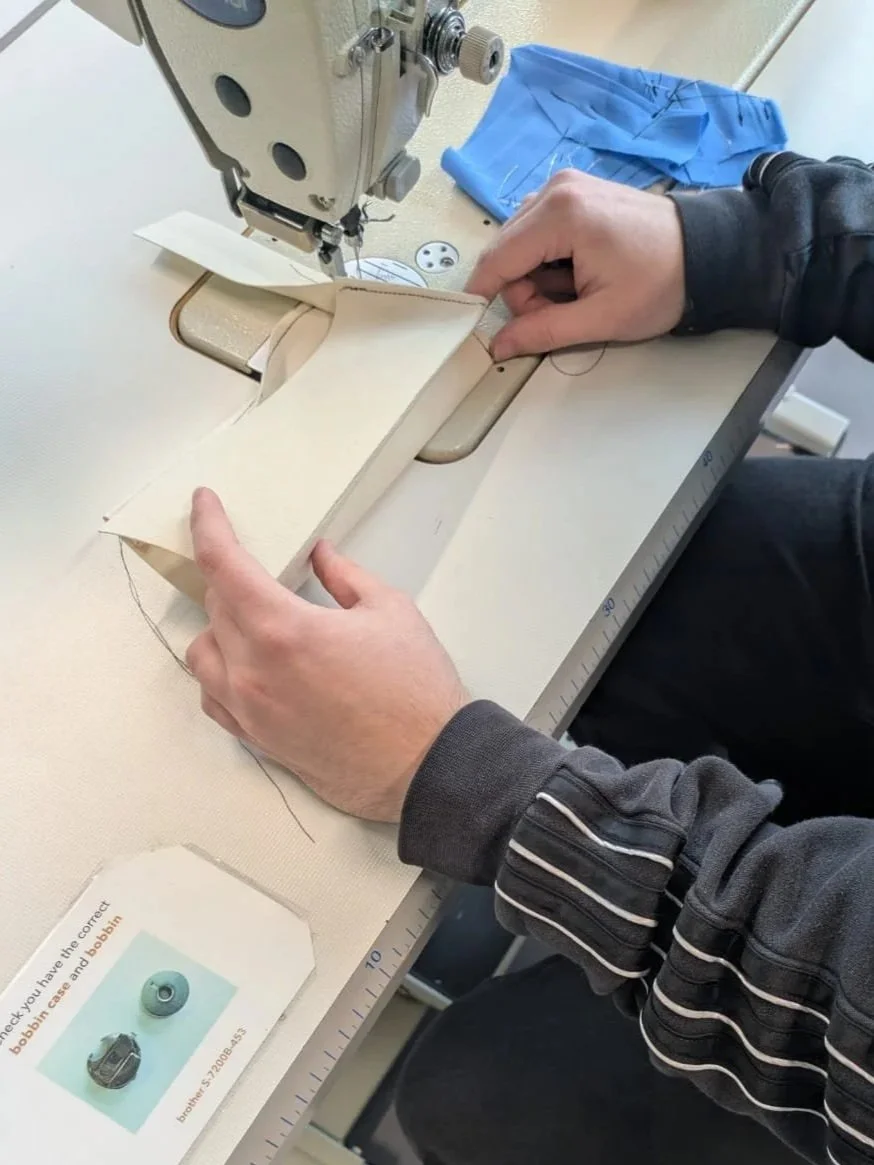
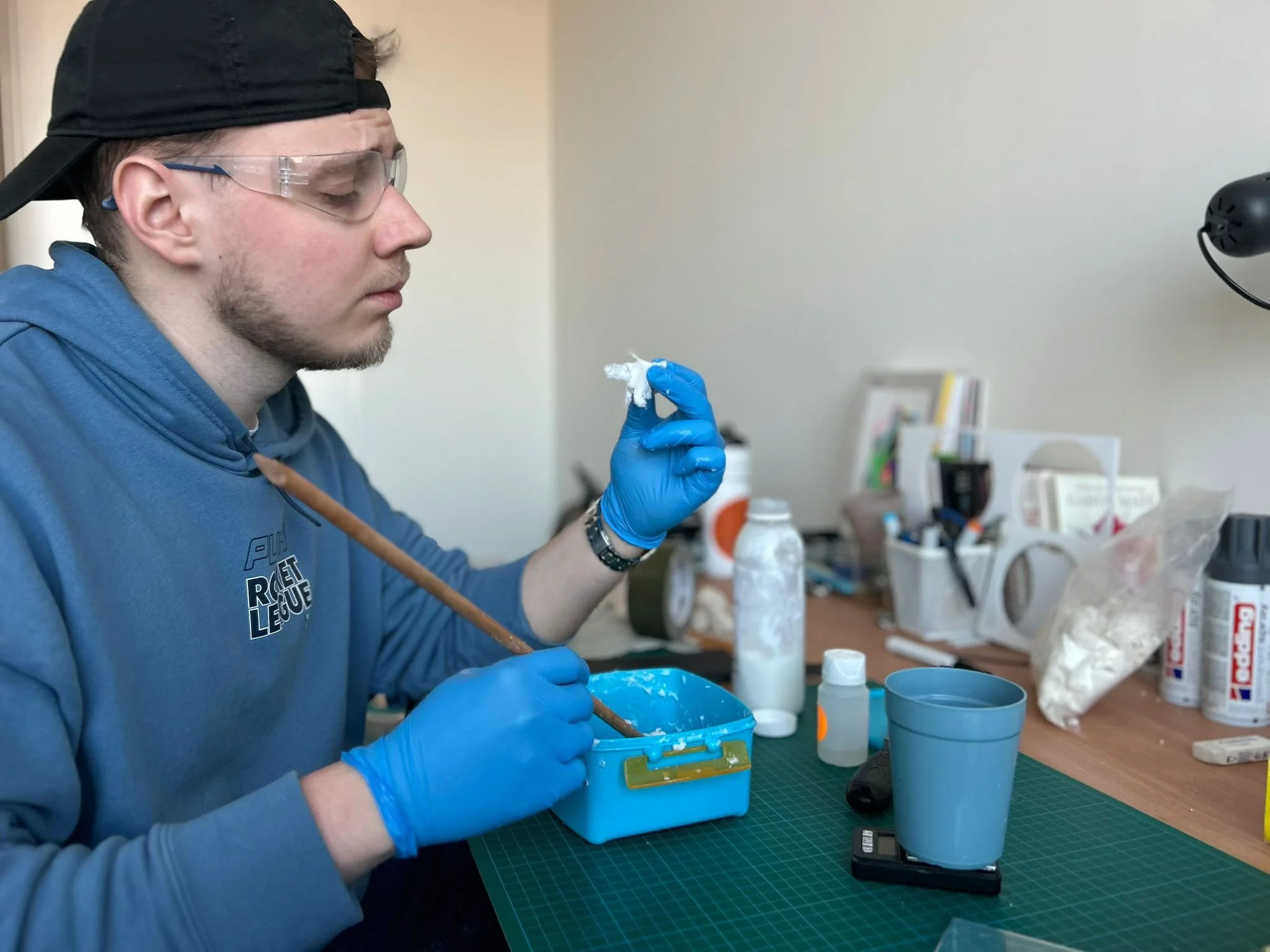
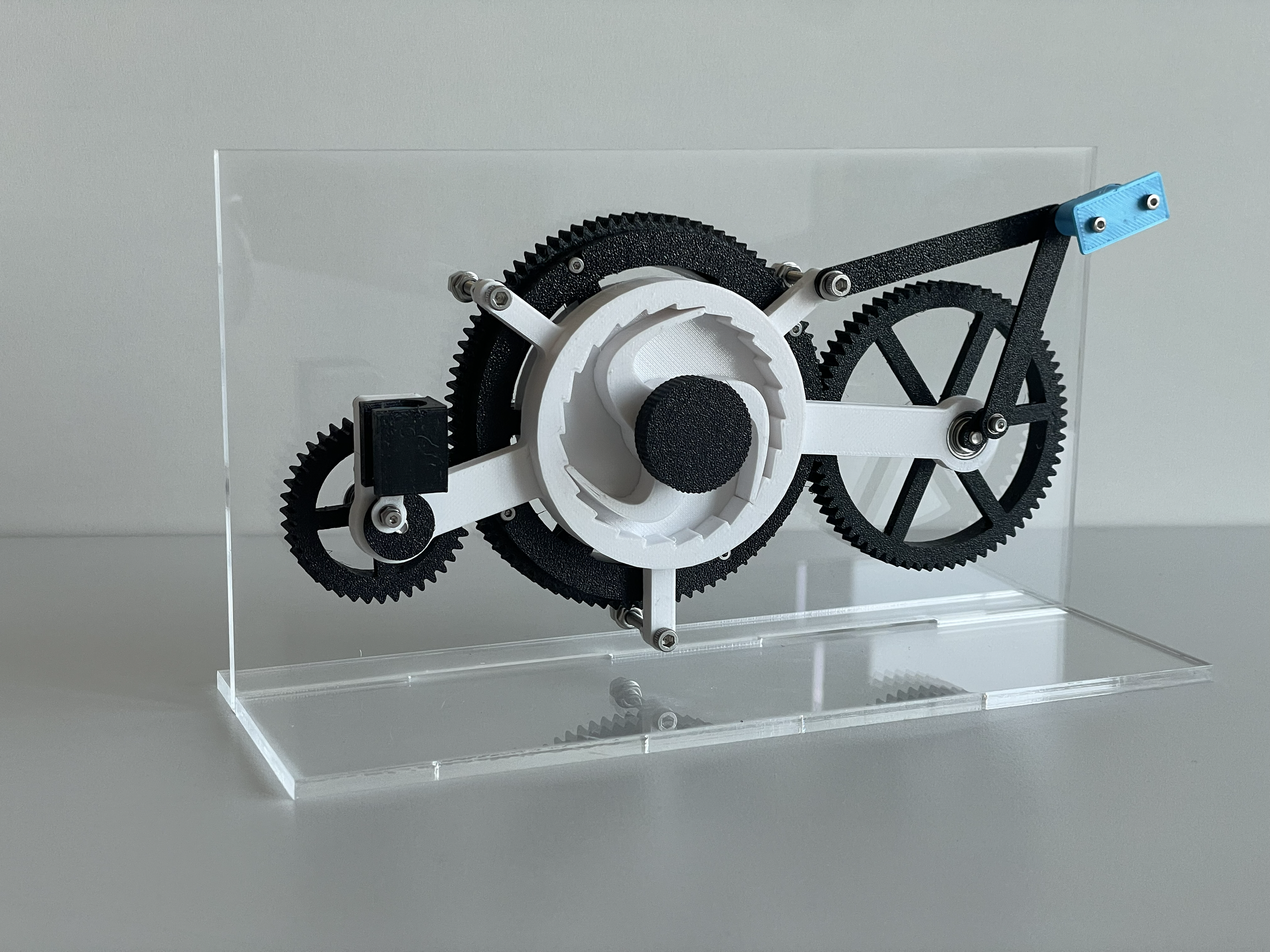
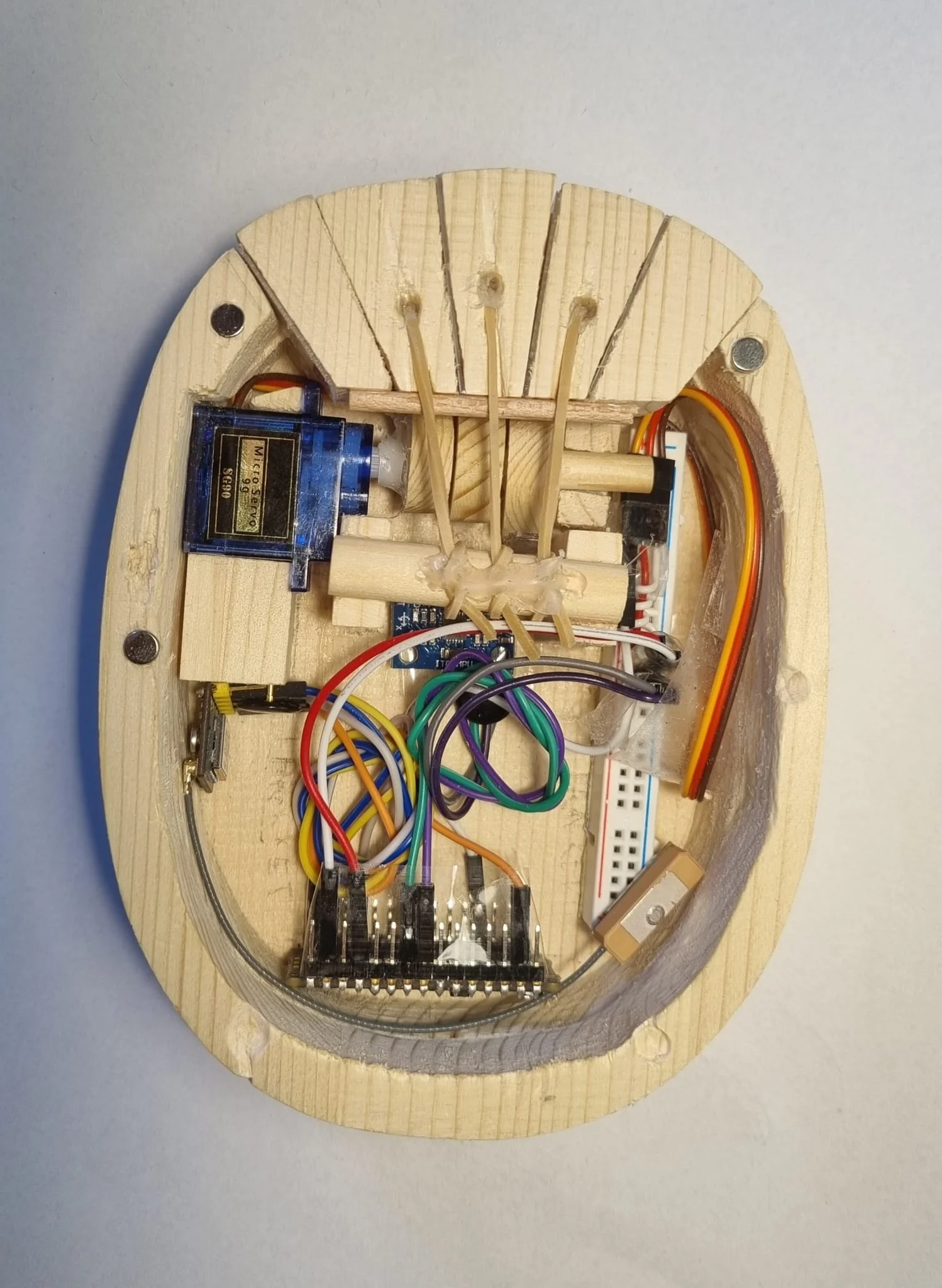
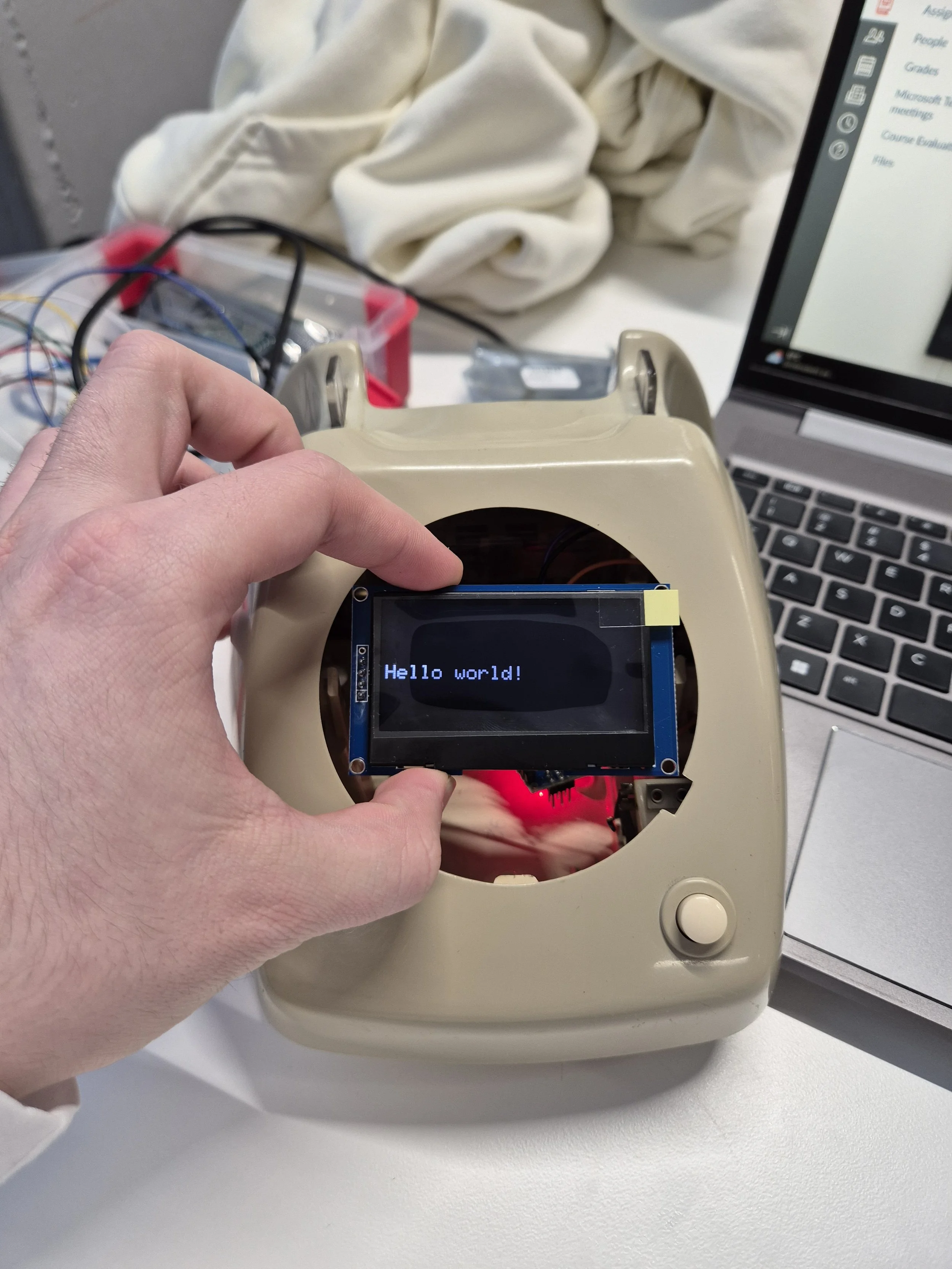
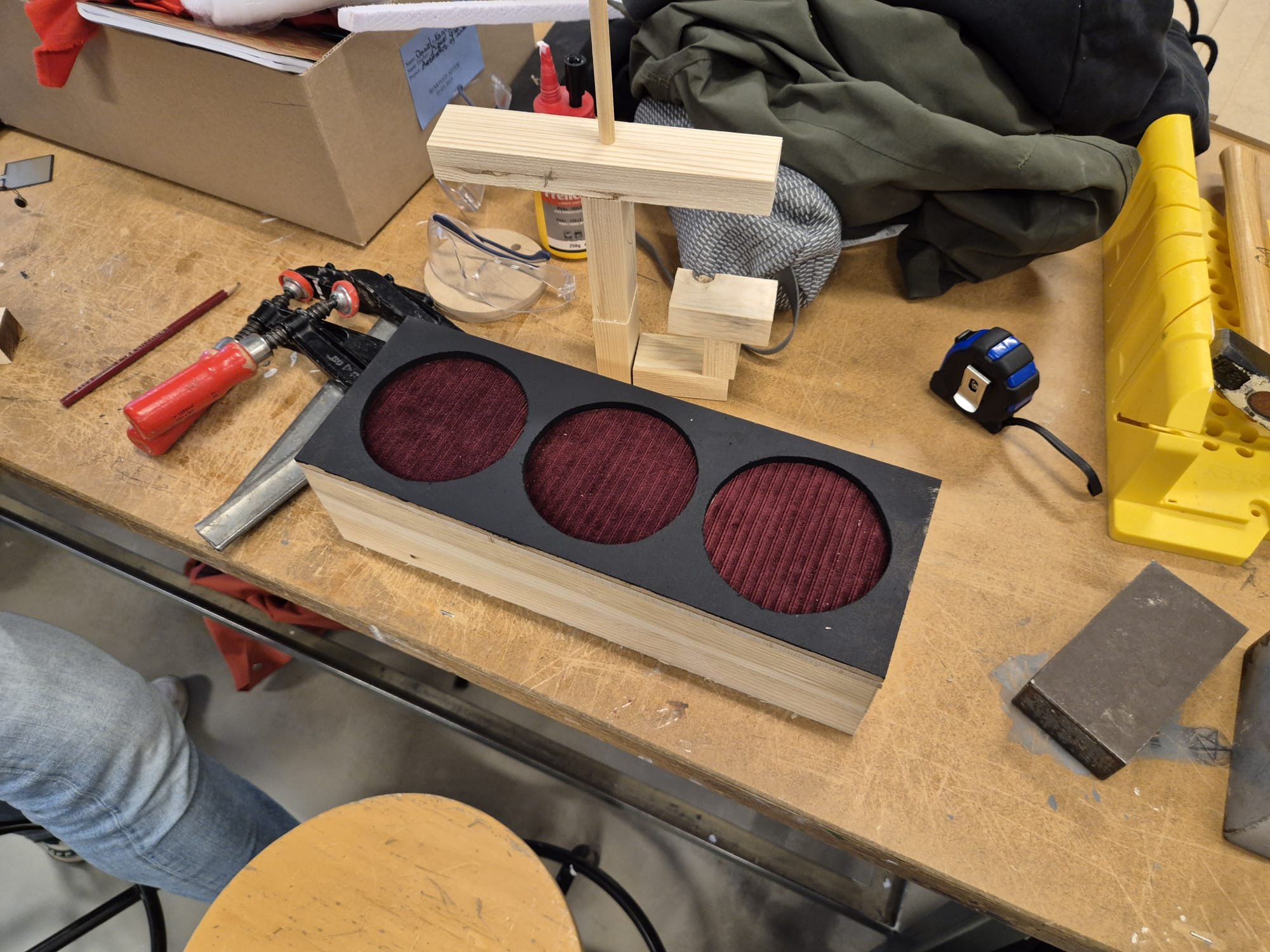
My greatest strength is my patience when working with my hands. Whether it is woodworking, sketching, or lo-fi prototyping, I am very confident and analytical in the process of creating physical prototypes. I am determined to deliver a prototype with the highest quality and precision, as I believe that precision highlights the quality of the prototype.
Sketching
Another prominent skill I have massively improved in is sketching. Despite having the advantage of attending arts school, I have been drawing slowly and precisely. However, once I started sketching more often, I became more confident and quick with my sketches. This is thus far the most valuable skill, as it enables me to directly visualize my ideas and express them on paper, making it easier to communicate to others.